
Description
Product Overview
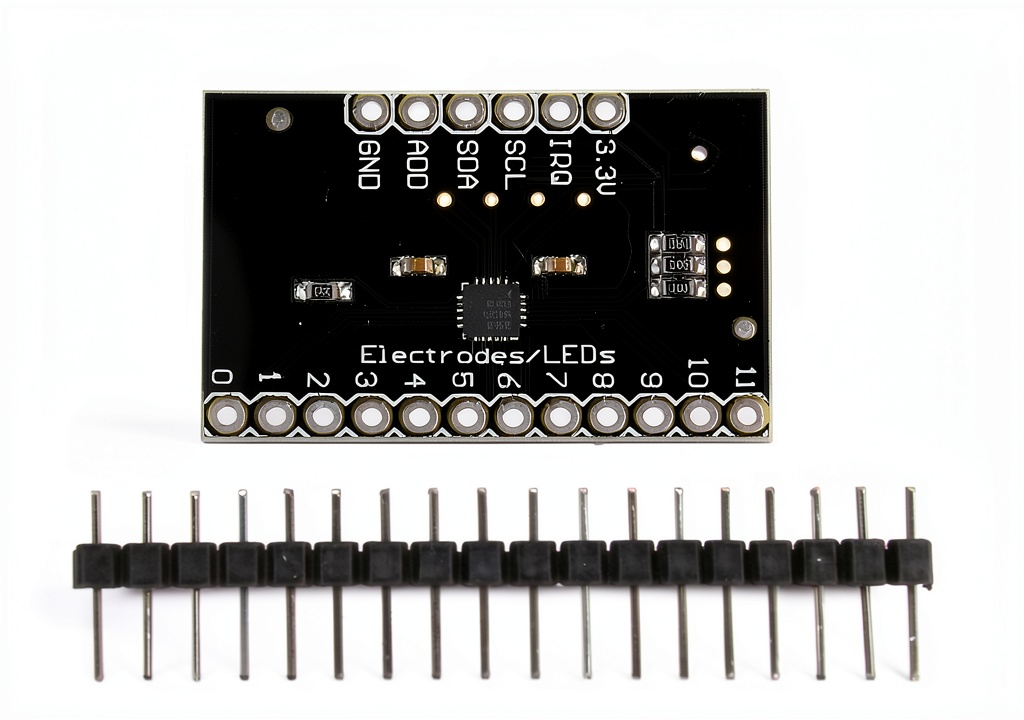
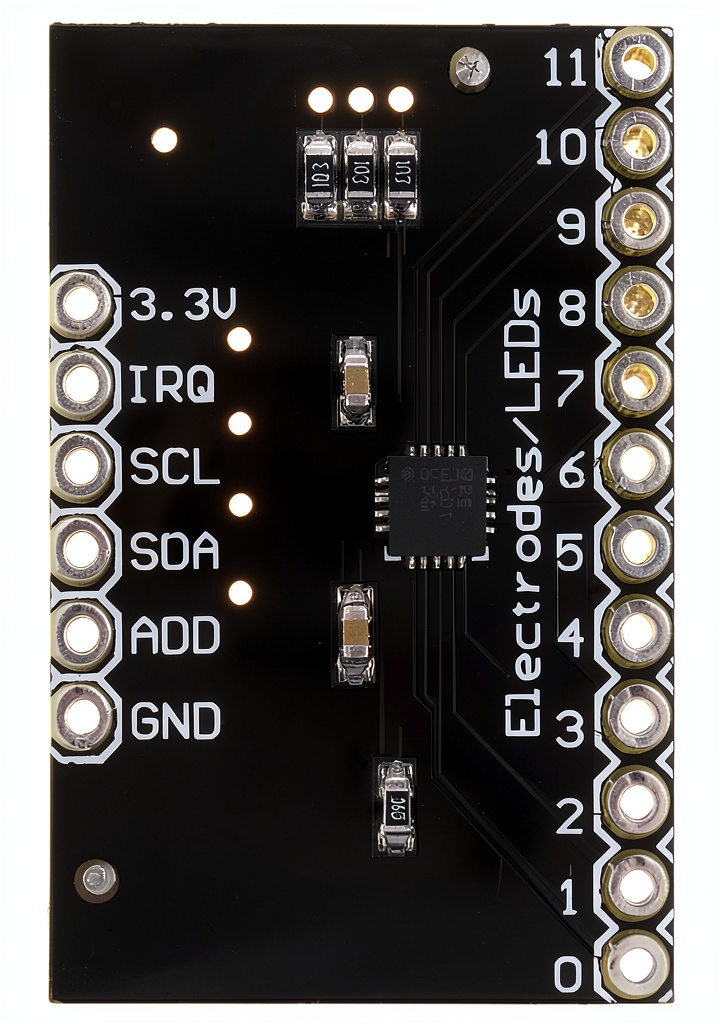
The NOYITO MPR121 breakout V12 is a highly versatile capacitive touch sensor module designed for developers who need reliable multi‑touch capability in a compact footprint. Built around the industry‑standard MPR121 chip, the board supports up to twelve independent electrodes, allowing designers to create complex touch interfaces such as keyboards, sliders, and gesture‑based controls. In addition to the twelve electrode inputs, the module provides eight dedicated LED driver pins that can be used to illuminate status indicators, backlights, or visual feedback elements, turning a simple touch surface into an interactive display.
Physically, the module measures just 0.63 × 0.31 × 0.12 inches and weighs a mere 0.176 ounces, making it suitable for space‑constrained applications like wearable devices, handheld controllers, and compact industrial panels. The board operates from a supply voltage range of 2.5 V to 3.6 V, delivering low‑power consumption as low as 29 µA at a 16 ms sampling interval and only 3 µA in stop mode. This efficiency enables long battery life in portable projects while still providing fast, responsive touch detection.
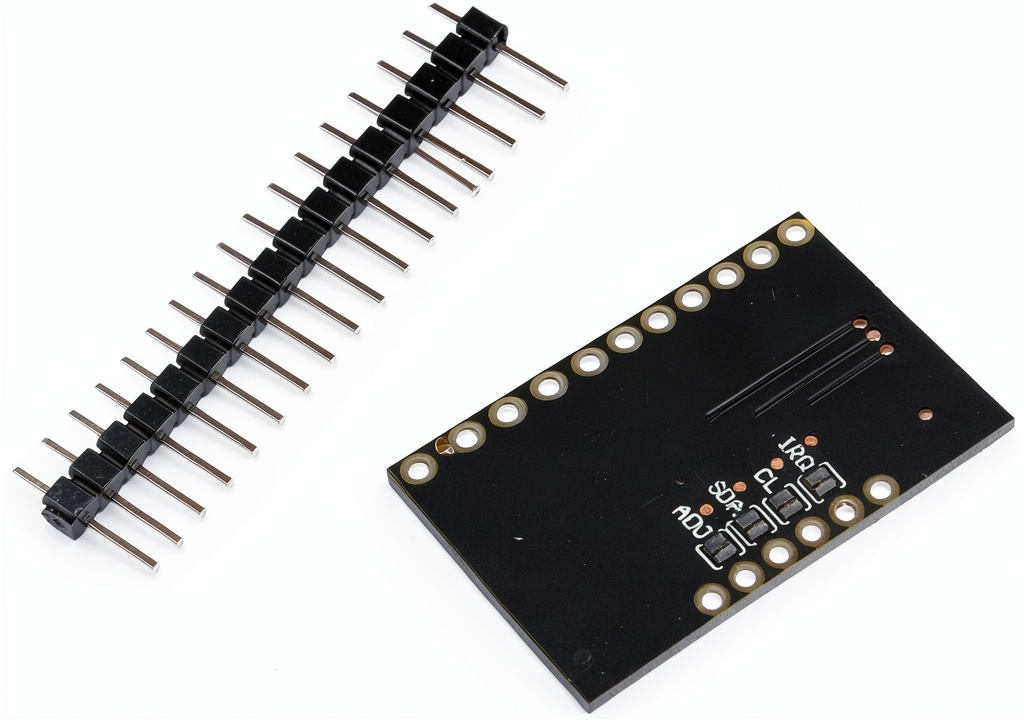
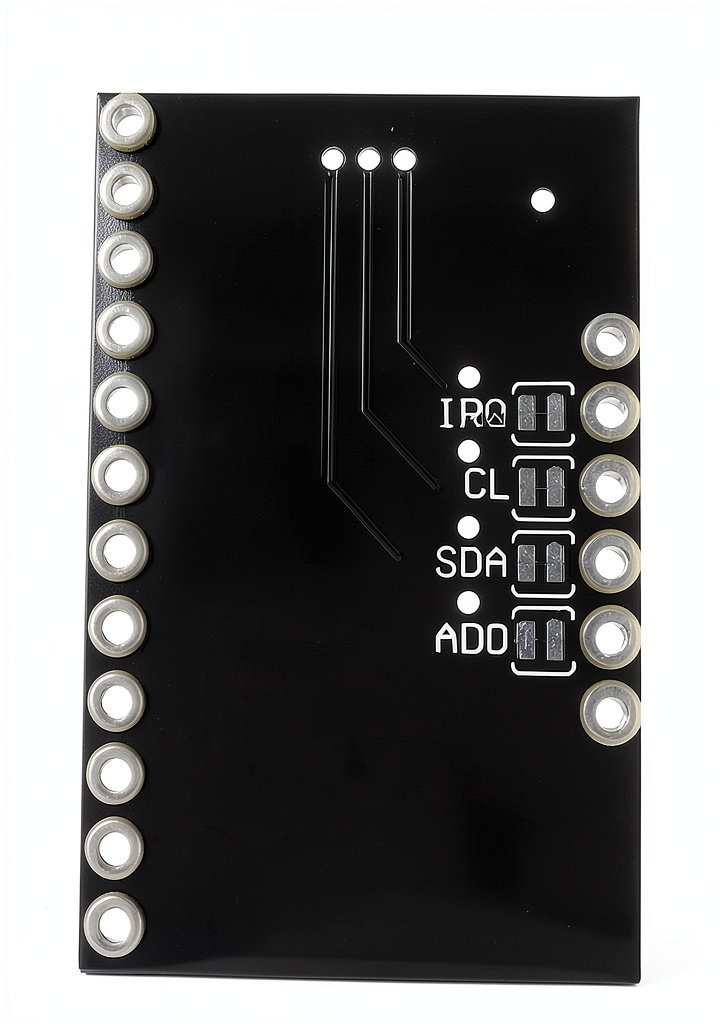
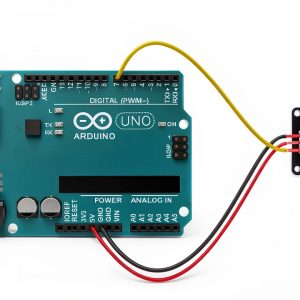
Communication with the host microcontroller is handled via a standard I2C interface, with the default address set to 0x5A. Four configurable jumpers on the bottom of the board allow users to modify the I2C address, enable or disable the LED driver pins, and adjust other operational parameters without soldering. The board does not include an on‑board voltage regulator, so the supplied voltage must be carefully matched to the target device, ensuring stable operation across a wide range of environments.
From a software perspective, the MPR121 chip offers a rich set of programmable thresholds, filtering options, and debounce settings, giving developers fine‑grained control over sensitivity and noise rejection. The module is fully compatible with popular development platforms such as Arduino, ESP32, Raspberry Pi, and many others, with libraries and example code readily available from the open‑source community. This ease of integration accelerates development cycles and reduces time‑to‑market for innovative touch‑enabled products.
Overall, the NOYITO MPR121 breakout combines robust hardware design, flexible configurability, and extensive software support into a single, low‑cost solution that meets the demands of hobbyists, educators, and professional engineers alike.
![[Product front view showing all components]](https://www.bestfair.store/wp-content/uploads/2026/07/727b75f2d40d4ac7990adcf28c045d8e.jpg)
Usage
In hobbyist projects, the MPR121 breakout shines as the core of custom keyboards, MIDI controllers, and interactive art installations. Its twelve electrode inputs enable designers to map each key or pad to a unique touch zone, while the LED driver pins can provide per‑key illumination, creating a visually striking user experience. Because the module operates at low voltage and draws minimal current, it can be powered directly from a 3.3 V or 5 V rail on most development boards, simplifying wiring and reducing the need for additional power management components.
For wearable technology, the tiny size and lightweight nature of the breakout make it an excellent choice for smart watches, fitness trackers, and health monitoring devices. The ability to detect multiple touch points simultaneously allows for gesture‑based controls, such as swipe, pinch, or multi‑finger taps, enhancing user interaction without adding mechanical buttons. The LED drivers can be used to indicate battery status, notifications, or mode changes, providing clear feedback in environments where screen space is limited.
In industrial and commercial settings, the MPR121 module can be integrated into control panels, safety interlocks, and equipment monitoring systems. Its robust I2C communication ensures reliable data transfer even in electrically noisy environments, while the configurable address jumpers allow multiple sensors to coexist on the same bus without conflict. The low power consumption is particularly valuable for remote or battery‑powered installations, where maintenance intervals must be minimized.
Educational institutions benefit from the breakout’s straightforward interface and abundant documentation. Students can experiment with touch sensing, learn about capacitive principles, and develop projects that combine hardware and software skills. The module’s compatibility with widely used platforms like Arduino and Raspberry Pi means that learners can focus on creative problem solving rather than dealing with complex driver development.
Regardless of the application, the MPR121 breakout provides a solid foundation for any project that requires responsive, multi‑touch input and visual feedback, all within a compact, cost‑effective package.
Why Choose Us
Choosing the NOYITO MPR121 breakout means selecting a product that has been rigorously tested for quality and reliability. Each board undergoes a comprehensive inspection process, including electrical continuity checks, I2C address verification, and functional testing of all twelve electrode channels and eight LED driver pins. This ensures that every unit leaving the factory meets the high standards expected by professional engineers and serious makers.
Our commitment to customer support extends beyond the point of sale. We provide detailed documentation, wiring diagrams, and example code that cover a wide range of use cases, from basic touch detection to advanced gesture recognition. If you encounter any challenges during integration, our technical support team is available to assist via email or community forums, offering prompt and knowledgeable guidance.
We also prioritize supply chain stability, maintaining sufficient inventory to meet the demands of both small‑scale hobby projects and large‑volume production runs. This reliability reduces lead times and helps you keep your development schedule on track, whether you are prototyping a single device or scaling up to a commercial product line.
Environmental responsibility is another pillar of our philosophy. The MPR121 breakout is manufactured using RoHS‑compliant components, and we strive to minimize waste by using efficient production methods and recyclable packaging. By choosing our product, you contribute to a more sustainable electronics ecosystem.
Finally, the NOYITO brand is recognized for delivering innovative sensor solutions that combine performance, affordability, and ease of use. Our track record of positive customer reviews and high seller rankings reflects the trust that the maker community places in our products.
Key Features
- Supports up to twelve independent capacitive touch electrodes for complex multi‑touch interfaces.
- Eight built‑in LED driver pins enable per‑touch visual feedback without extra components.
- Low‑power operation from 2.5 V to 3.6 V, consuming as little as 3 µA in stop mode for battery‑run designs.
- Standard I2C interface with configurable address jumpers for easy integration alongside other sensors.
- Comprehensive technical support, detailed documentation, and responsive after‑sales service.
FAQ
What voltage range can the MPR121 breakout operate within?
The module is designed to work with a supply voltage between 2.5 V and 3.6 V. This range covers most common microcontroller logic levels, allowing you to power the sensor directly from 3.3 V or 5 V sources while maintaining stable performance.
How many touch electrodes can I use simultaneously?
The MPR121 chip can monitor up to twelve electrodes at the same time. You can configure each electrode individually for sensitivity, debounce, and filtering, enabling sophisticated multi‑touch gestures such as swipes, pinches, and multi‑finger taps.
Can the LED driver pins be used when the electrodes are active?
Yes. The eight LED driver pins are independent of the twelve electrode inputs. When a pin is not assigned to an electrode, it can be used to drive LEDs or other low‑current loads, providing visual cues that correspond to touch events or system status.
Is there a library available for Arduino?
Absolutely. The Adafruit_MPR121 library and several community‑maintained examples are compatible with the NOYITO breakout. These libraries simplify initialization, electrode configuration, and reading touch data, allowing you to get a prototype up and running within minutes.
What is the typical current consumption during active touch detection?
During normal operation with a 16 ms sampling interval, the module draws approximately 29 µA. In stop mode, when touch detection is disabled, the current drops to about 3 µA, making it ideal for long‑life battery applications.
 Springer Architecture Reference Information Management
Reviews
There are no reviews yet.